Proof Over Pedigree: How Demonstrated Skills Are Rewriting the Rules of Professional Credibility
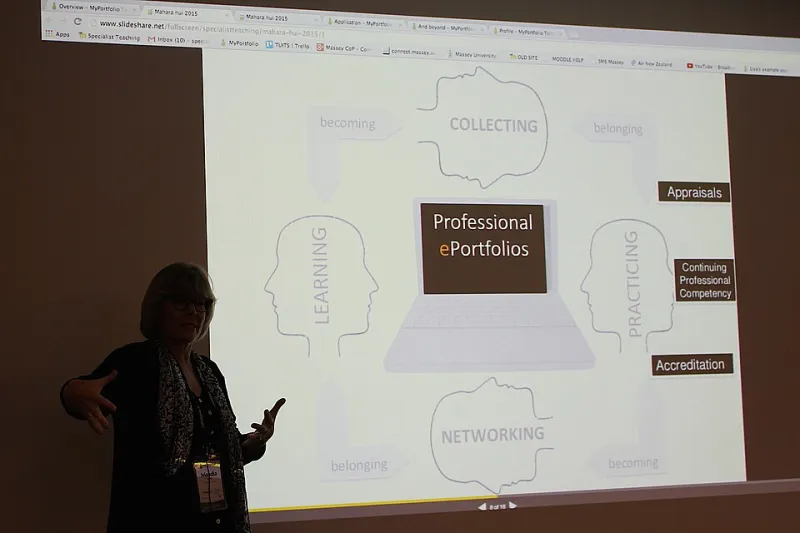
Photo: Mahara Hui New Zealand, CC BY-SA 2.0, via Wikimedia Commons
When the Diploma Stops Opening Doors
For decades, the American professional playbook followed a predictable sequence: earn a degree, present it to employers, and allow it to function as a proxy for capability. The logic was straightforward. A diploma from an accredited institution signaled discipline, baseline knowledge, and the ability to complete a long-term commitment. Employers, lacking better tools, trusted it.
That system is under significant strain.
Companies including Apple, Google, IBM, and Accenture have publicly removed four-year degree requirements from substantial portions of their job listings. LinkedIn's own workforce data has consistently shown growth in skills-based job postings that emphasize demonstrated ability over educational background. What was once a fringe hiring philosophy has become a competitive strategy embraced by some of the most talent-hungry organizations in the country.
This is not an argument against education. Advanced degrees retain meaningful value in certain fields, and the intellectual foundation a rigorous academic program provides remains genuinely useful. The shift, rather, is about what employers are now willing to accept as proof of readiness — and that threshold has moved considerably.
The Signal Problem With Academic Credentials
The core issue is one of signal quality. A degree tells a hiring manager that a candidate completed a program at some point in the past. It does not necessarily confirm that the candidate can perform the specific tasks a role requires, adapt to the pace of a particular industry, or produce results under real organizational constraints.
In fast-moving sectors — technology, digital marketing, data analytics, product management — the gap between what universities teach and what employers need has widened to the point where a diploma may actually obscure more than it reveals. A candidate who graduated three years ago with a computer science degree may have learned frameworks that are already outdated. A self-taught developer with a GitHub repository full of deployed applications, by contrast, offers something an employer can evaluate directly.
This is the credential paradox: the document designed to certify competence can, in certain contexts, become a distraction from it.
Building Credibility Through Demonstrated Work
If the diploma is no longer sufficient, what replaces it? The answer lies in constructing a visible record of what you have actually accomplished.
Portfolios and Work Samples
For professionals in creative, technical, or analytical fields, a curated portfolio remains one of the most powerful credibility tools available. This does not require elaborate production. A well-organized collection of case studies, project summaries, code samples, writing samples, or data visualizations — hosted on a personal website, a professional platform, or a service like Notion — gives hiring managers something concrete to evaluate. The work speaks for itself in ways that a degree listing on a résumé simply cannot.
If your current role does not generate portfolio-ready output, consider contributing to open-source projects, taking on freelance assignments, or completing structured capstone projects through professional development programs. The goal is to accumulate evidence that exists independently of your employer's internal systems.
Industry Certifications and Micro-Credentials
The rise of credentialing bodies outside traditional academia has created a legitimate alternative pathway. Certifications from recognized professional organizations — the Project Management Institute, the American Marketing Association, Google, AWS, Salesforce, and others — carry weight precisely because they are tied to current industry standards rather than academic curricula. Unlike a degree, many of these credentials require periodic renewal, which signals to employers that your knowledge is actively maintained.
Micro-credentials offered through platforms aligned with professional development — structured programs that culminate in verifiable badges or certificates — are increasingly recognized by HR departments as meaningful signals. They demonstrate initiative, specificity, and a commitment to staying current.
Quantified Results and Professional Narratives
Perhaps the most underutilized credibility-building tool is the disciplined articulation of outcomes. Professionals who can speak precisely about what they have accomplished — not just what they were responsible for, but what actually changed as a result of their work — communicate competence in a language employers understand immediately.
Consider the difference between "managed a marketing team" and "led a six-person team that reduced customer acquisition cost by 34 percent over two quarters through a targeted content strategy overhaul." The second statement is a demonstration of competence. It is auditable, specific, and replicable in a new context. Developing this kind of professional narrative requires intentional reflection, but it is one of the highest-return investments a career-focused professional can make.
Navigating the Transition Strategically
For professionals who built their careers during an era when credentials carried more weight, this shift can feel disorienting. The good news is that demonstrated competence and formal credentials are not mutually exclusive. The strategy is to lead with evidence while allowing credentials to serve as supporting context rather than the primary argument.
Update your LinkedIn profile to foreground accomplishments and skills rather than job titles and degree listings. Seek out opportunities to publish, speak, or contribute to industry conversations in ways that create a public record of your expertise. When preparing for interviews, develop specific stories that illustrate your capabilities through concrete situations and measurable outcomes.
For those earlier in their careers who may be weighing the cost of a traditional degree against alternatives, the calculus has genuinely changed. The question worth asking is not simply "what credential will get me hired?" but rather "what combination of learning, practice, and demonstrated output will make me the most compelling candidate in the roles I am targeting?"
The Competitive Advantage of Visible Competence
The professionals who will thrive in the current hiring environment are those who understand that credibility must be earned continuously, not conferred once at graduation. The degree, if you have one, remains a useful foundation. But the structure built on top of that foundation — the portfolio, the certifications, the quantified results, the professional reputation — is what will ultimately determine how far your career advances.
In a market where every candidate can list credentials, the ones who show their work will consistently stand apart.