Beyond the Single Mentor: How a Diverse Relationship Portfolio Accelerates Professional Growth

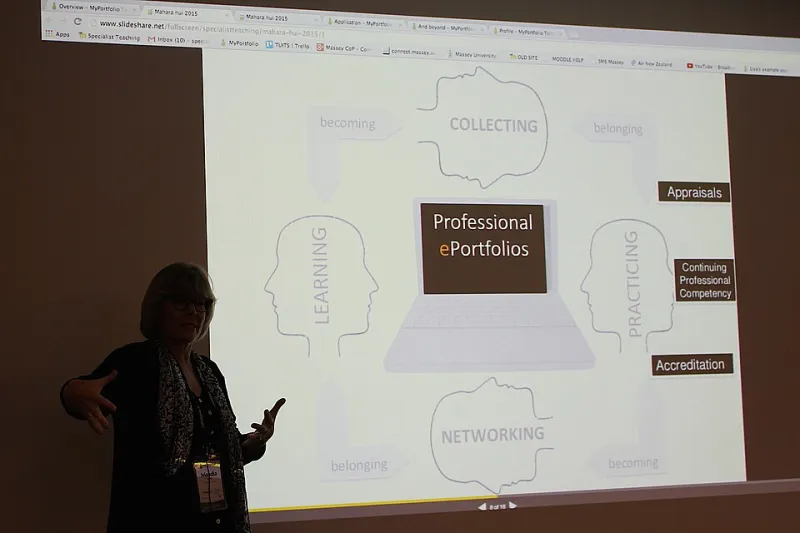
Photo: Ganesh Mohan T, CC BY-SA 4.0, via Wikimedia Commons
The Mentor Expectation and Why It Stalls Careers
Ask any group of ambitious professionals what they believe is missing from their career development, and a significant portion will cite the absence of a mentor. It has become one of the most persistent pieces of career advice in American professional culture — find someone wiser, more experienced, and willing to guide you. The advice is well-intentioned. It is also incomplete in ways that cause real harm.
The problem is not that mentorship lacks value. The problem is that framing career development as a search for a single transformational relationship creates a passive orientation that leaves professionals waiting rather than building. It concentrates an enormous amount of developmental potential in one person who may be unavailable, misaligned with your specific goals, or simply unable to provide the range of support a dynamic career actually requires.
The professionals who advance most consistently are not those who found the right mentor. They are those who cultivated a deliberate ecosystem of relationships — each serving a distinct function, each contributing something the others cannot.
Rethinking the Architecture of Professional Relationships
A more useful mental model is the relationship portfolio. Just as a sound investment strategy distributes capital across different asset classes to manage risk and capture multiple opportunities, a sound career development strategy distributes relational investment across different types of professional connections.
Four relationship types are particularly worth developing intentionally.
Sponsors: The Advocates in the Room
A sponsor is fundamentally different from a mentor. Where a mentor offers guidance and advice, a sponsor uses their own professional capital to actively advance your career — nominating you for opportunities, vouching for you in rooms you have not yet entered, and connecting your name to high-visibility projects.
Sponsors are typically senior professionals within your organization or industry who have observed your work directly and are willing to stake some of their reputation on your potential. Earning a sponsor's advocacy requires demonstrating performance that gives them something credible to advocate for. The relationship is transactional in the most productive sense: you deliver exceptional work and visible results; they extend their influence on your behalf.
Identifying potential sponsors means looking beyond those who are simply friendly toward you and focusing on those who have the organizational standing to move the needle on your career and who have seen evidence of what you can do.
Peers: The Underestimated Network
Lateral relationships — with colleagues at roughly your level, in your field or adjacent ones — are among the most consistently underinvested professional assets. Peers provide real-time market intelligence, honest feedback uncomplicated by hierarchical dynamics, collaborative opportunities, and, over time, referrals and introductions as your respective careers diverge and expand.
The peer network you build in your thirties becomes the senior network you draw on in your forties and fifties. Investing in these relationships now, before they carry obvious transactional value, is one of the highest-return career moves available to mid-career professionals.
In a distributed work environment, maintaining peer relationships requires more deliberate effort than it once did. Scheduling regular informal conversations, participating in professional communities and industry associations, and engaging substantively in professional forums are all practical ways to keep these connections active.
Reverse Mentors: Learning from Those Coming Up
One of the most valuable and least utilized relationship structures in professional development is the reverse mentor — a younger or less senior professional whose perspective, skills, or cultural fluency can sharpen your own capabilities.
In an era defined by rapid technological change and shifting workplace norms, the professionals most at risk are those who assume their accumulated experience is sufficient. A reverse mentoring relationship with someone ten or fifteen years younger can provide unfiltered exposure to emerging tools, communication styles, and industry dynamics that formal training programs often lag behind.
Approaching a reverse mentoring relationship requires genuine intellectual humility. It means entering the dynamic as a learner rather than an evaluator, and creating enough psychological safety that the other person feels comfortable offering candid perspective rather than simply deferring to your seniority.
Domain Advisors: Targeted Expertise on Demand
Not every developmental need requires an ongoing relationship. Some require access to specific expertise at specific moments — a seasoned attorney when you are negotiating an employment contract, a financial advisor when you are evaluating an equity offer, a communications specialist when you are preparing for an executive-level interview.
Domain advisors are professionals whose expertise you access deliberately and periodically rather than continuously. Building relationships with a small number of trusted specialists across the domains most relevant to your career gives you access to high-quality, situation-specific guidance without overburdening any single relationship.
Approaching and Sustaining Strategic Relationships
Knowing which types of relationships to build is only half the challenge. The other half is approaching them effectively and maintaining them over time.
Lead with value. The most common mistake professionals make when attempting to build strategic relationships is leading with what they hope to receive. Every relationship of lasting value is built on reciprocity. Before approaching anyone for guidance, sponsorship, or collaboration, identify what you can genuinely offer — whether that is relevant information, a useful introduction, a specific skill, or simply thoughtful engagement with their work.
Be specific about what you need. Vague requests for mentorship or guidance are easy to decline because they require the other person to design the entire interaction. Specific, bounded requests — a thirty-minute conversation about how they navigated a particular career transition, feedback on a specific piece of work, an introduction to a particular person — are far more likely to receive a positive response.
Maintain relationships before you need them. A relationship activated only in moments of need is not a relationship — it is a transaction. The professionals who have robust networks to draw on during career transitions or challenging moments are those who invested in those connections during ordinary times, through consistent communication, genuine interest, and reciprocal support.
Adapt your approach for distributed environments. Remote and hybrid work has changed the texture of professional relationship-building. Spontaneous hallway conversations no longer exist for many professionals. Replacing them requires intentional scheduling, active participation in virtual professional communities, and a willingness to initiate connection rather than waiting for proximity to create it.
The Portfolio in Practice
Building a relationship portfolio is not a project with a completion date. It is an ongoing professional practice — one that requires periodic assessment, deliberate cultivation, and honest evaluation of where gaps exist.
Consider auditing your current network against the four relationship types described here. Where are you well-resourced? Where are you exposed? The answers will tell you where to direct your relational investment over the coming months.
Career advancement has never been a solo endeavor. The professionals who understand that — and who build the diverse, strategic relationships that reflect that understanding — consistently reach levels that those waiting for a single mentor rarely attain.